
Breaking the medicine apart actually led to coma! Why can't some medicines be taken by breaking them apart? Keep these points in mind when taking medicine
Source: CCTV News Clien
Recently, a woman in Fujian Province experienced a sudden drop in blood pressure and even fell into a coma after taking nifedipine controlled-release tablets. Why does taking a piece of medicine by breaking it apart have such an impact on patients?
Do not bite, chew or break the controlled-release tablets
What kind of medicine is nifedipine controlled-release tablet? Why can't it be broken open for consumption?
Liu Fang, a chief pharmacist from the Department of Pharmacy at Peking University Third Hospital, said: "Nifedipine is actually an antihypertensive drug. In the past, when we didn't have sustained-release and controlled-release preparations, we used regular tablets. At that time, we needed to take 10 milligrams each time, three times a day, so the total daily dose was 30 milligrams." Now that we have this controlled-release technology, controlled-release tablets can put a dose of 30 milligrams, which is taken three times a day, in one tablet and then release it at a constant speed and evenly, enabling the patient's blood pressure to remain stable for 24 hours.
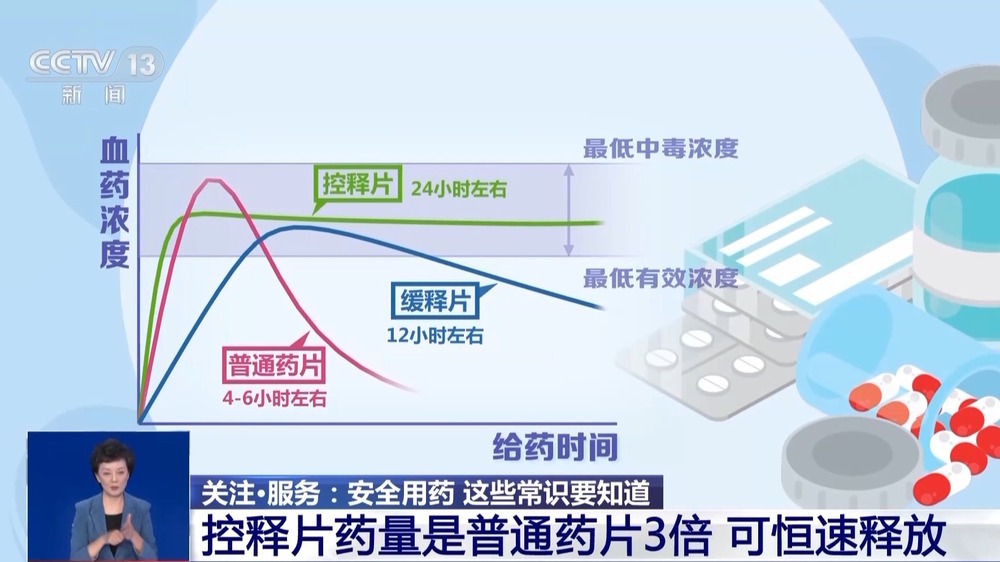
Journalists' interviews have revealed that the rate at which ordinary tablets take effect, are absorbed and disappear is usually around 4 to 6 hours, and patients need to take the medicine three times within 24 hours. Sustained-release tablets, on the other hand, are released slowly in the body for about 12 hours and need to be taken twice a day. Controlled-release tablets can release the drug dosage at a constant rate. The dosage is three times that of ordinary tablets. Patients only need to take it once a day, and the drug effect is released at a constant rate in the body for about 24 hours.

Experts stress that the reason why controlled-release tablets can be released at a constant and slow rate in the body is that they are formulated with a special process. When taking them, patients should swallow the whole tablet. Biting, chewing or breaking the tablet will destroy the constant and slow release function of the controlled-release tablet, which is equivalent to the patient taking the medicine at three times the dosage.

Liu Fang, a chief pharmacist from the Department of Pharmacy at Peking University Third Hospital: Controlled-release tablets are actually made with a special formulation technology. The surface of the tablet has a semi-permeable membrane and a small hole formed by a laser. We can imagine the entire tablet as a water tank with a faucet installed on top. When we turn on the faucet, the medicine can be released slowly and at a constant rate. However, if we destroy the preparation of this drug, it is equivalent to cutting open and destroying the entire water tank. Then all the water will be released at once, which is equivalent to the daily dosage. All of this will be absorbed into the blood at once, so it will cause the patient's blood pressure to drop sharply and lead to adverse reactions.
The medication times for different drugs
The sequence should be kept in mind
In addition to controlled-release tablets, patients should also be cautious before taking ordinary tablets. They need to read the instructions carefully and take the medicine as prescribed by the doctor. In addition, it is necessary to understand the time and sequence of taking different medications; otherwise, it may affect the efficacy of the drugs and even cause adverse reactions.
In addition, patients usually take traditional Chinese medicine about half an hour after taking Western medicine. Tonics are suitable to be taken before meals. For drugs not specifically indicated on the instructions, especially those that may irritate the gastrointestinal tract, it is generally advisable to take them half an hour after meals.

Liu Fang, chief pharmacist of the Department of Pharmacy at Peking University Third Hospital: Here, I particularly want to remind everyone that during the period of taking sedative-hypnotic drugs, we should not drink alcohol. Or conversely, if you have drunk alcohol, you should not take sedative-hypnotic drugs because alcohol itself has a central inhibitory effect, and sedative-hypnotic drugs also have a central inhibitory effect. If you take hypnotic drugs while drinking alcohol, it will aggravate the adverse reactions of central inhibition.
There are certain considerations for the storage of medicines
Improper temperature and humidity may affect the therapeutic effect
At the same time, during the medication period, patients should also pay attention to the storage of the medicine, and be aware of whether there are any special requirements in terms of temperature, humidity, etc., to avoid affecting the efficacy of the medicine and causing adverse effects.
Sun Zhengyuan, a chief pharmacist at the Department of Pharmacy of Peking University Third Hospital, said: "For instance, some biological preparations, such as insulin, need to be stored in a refrigerator. Insulin should be kept at a temperature between 2 and 8 degrees Celsius. If the temperature is too high or too low, insulin will become inactive, which will affect its therapeutic effect."
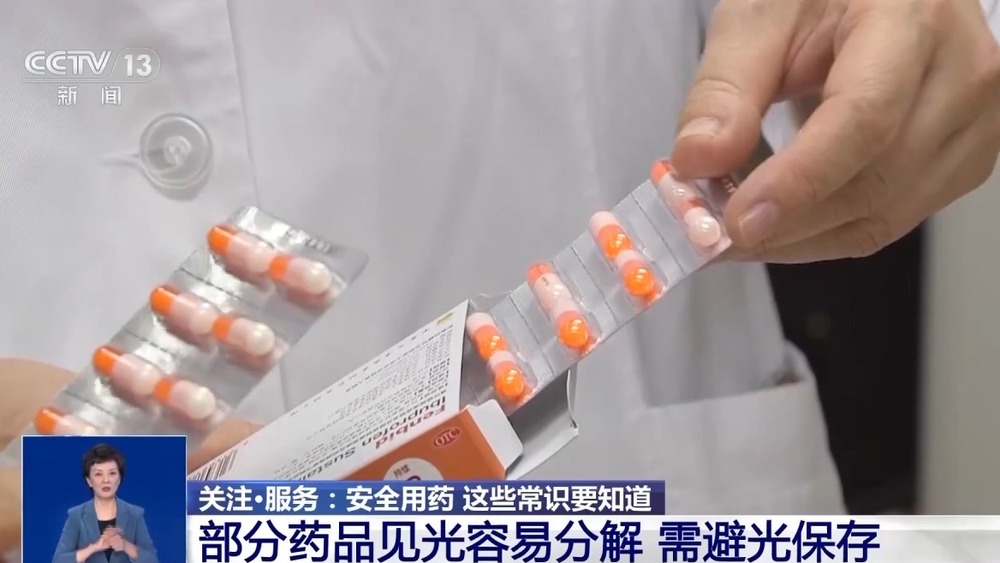
Apart from temperature and humidity, there are also some medicines that are sensitive to light. They tend to decompose easily when exposed to light, which may cause the medicines to lose or have their efficacy reduced. Such medicines need to be stored away from light.
|
Last:Reprint:Minimally Invasive Medical: Some of its business will be sold in 2025
Next:Reprint:How to use the medical insurance code to prescribe medicine for the elderly? |
Return |

Mobile website